Tuesday, October 22, 2019

Chapter Five

Technology Timeline

Here is my Technology timeline, on Prezi
In the article, it mentions “Pew Research Center” it is stated, “The share of Americans that own smartphones is now 81%, up from just 35% in Pew Research Center’s first survey of smartphone ownership conducted in 2011.”

In the article, it stated Wet-collodion process, also called collodion process, early photographic technique invented by Englishman Frederick Scott Archer in 1851.

In the article, it mentions Vinton Cerf, in full Vinton Gray Cerf, (born June 23, 1943, New Haven, Connecticut, U.S.), American computer scientist who is considered one of the founders, along with Robert Kahn, of the Internet.

In the website, it mentions, The daguerreotype was the first commercially successful photographic process (1839-1860) in the history of photography.

Tuesday, October 8, 2019

Chapter Four

Working in the Digital Age- Blogs

Blogs can be used for online journals or for websites that show information, news, images taken and/or written by the owner of the blog. It is a website were you write and others share their views and understanding on certain images and your stories. Every human being has a story of their own to be told. Blogs are being regularly updated with stories or captured images. Blog posts are to have publishing dates, authors, tags within hyperlinks, etc. For photojournalists blogging is popular for the simple reason that they can upload what why want when they want. By having a blog you can also communicate, for example; for this online class we(students) had to create a blog and constantly update blogs every week and this is how we communicate with our professor and classmates.
Photo Screenshot By: Nahiomy Martinez
Blogs can affect photojournalism and/or photojournalists in a good way. In my opinion, Blogs affected photojournalism/photojournalist positively because they are able to post images, tell news, and share with the world the places they have visited, etc. by posting. They are able to get feedbacks on comments. It's takes the process to edit, and upload instead of being published through newspaper or writing out journals or magazines.
Photo By: Kip Praslowicz
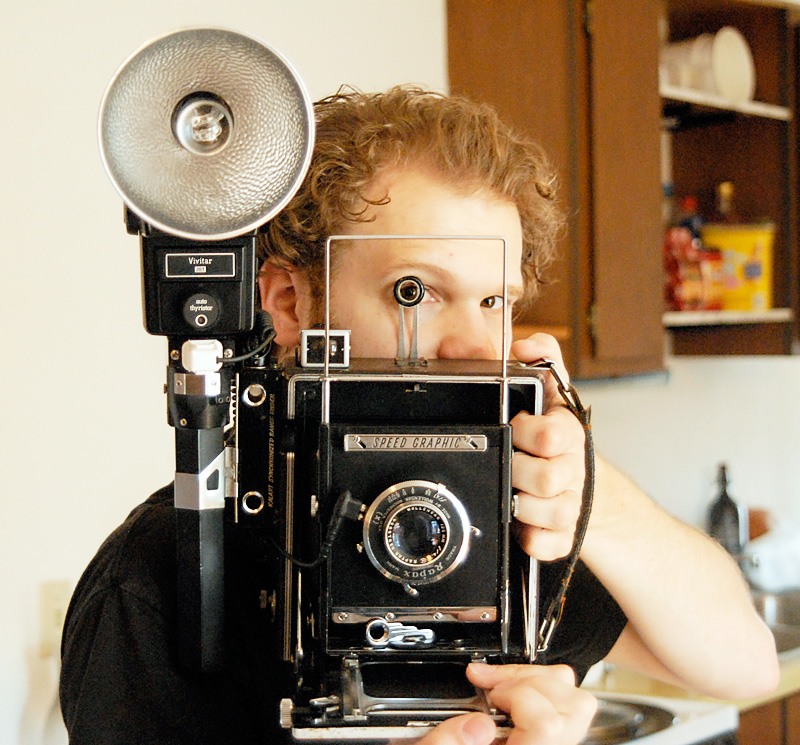
Though, it is obvious the difference between Blogs and the Speed Graphic Camera are not very much alike; with the camera you can take images, with blogs you upload images that are taken by a camera. With a camera, the person would have to have a journal near by in order to write their stories to that image, with blogs you update and type out the story. Images and journals can be criticized in blogs but with the camera it cannot be criticized until uploading on a website because we can simple delete an image we did not like on a camera and never see it again. A similarity would be that they both have some sort of storage to save images/videos.

As it was hard to compare between blogs and an actual camera, “The Speed Graphic Camera”. I found some differentials. On the article about blogs, it is mentioned, "Blogs used to be called 'weblogs', created in 1994 by Justin Hall". A blog is by a personal narrative. Blogs can be in multiple forms such as videos, written journals, and captured images. Blogs are accessible to all populations with internet ability and could also be criticized by people with access to them.

On the other hand, The Speed Graphic Camera was made in 1912 by Graflex, in New York (refer to M4 Module for more information). This camera was accessible during the 1930s through 1950’s. In the article, “The Graglex Speed Graphic FAQ”, it was said, “The Speed Graphic has not been manufactured since 1973 and most photographers today are unable to make a direct comparison." Also, in a different article, it was mentioned, "This camera was said to be a very first and last really good camera." The used of this camera, said in the article, “The Speed Graphic was engineered for general purpose commercial photography such as wedding, portraiture, product, documentary, advertising and landscape photography.”

Tuesday, October 1, 2019

Chapter Three

The Art of Photojournalism
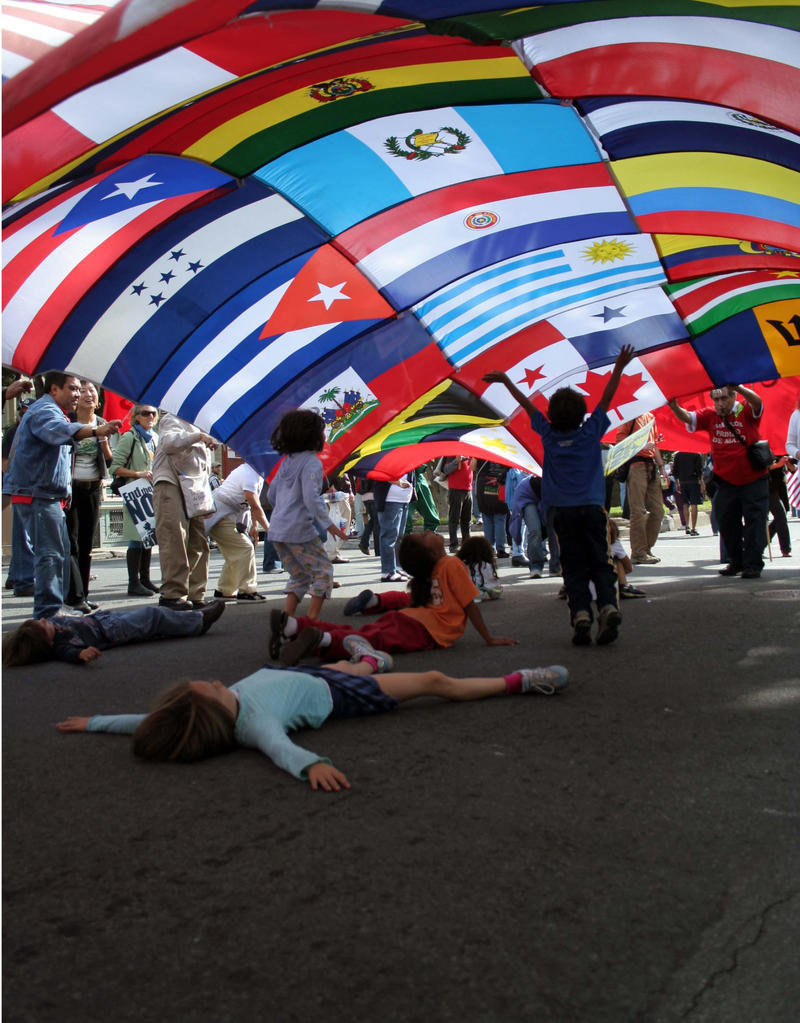
Photo By: Jerad Hobaugh
Year Created: 2008
Principle #1: Quality of Light
The light is surprising, this is because we see kids and families enjoying the view of different flags. It is important for everyone to know about each flag, race and ethinicty. The direction of the light impacts the image because it's focused on the flags.
Principle #2: Exposure time 
The kind of shutter speed used in this image is freeze action, this is because the photograph was taken in the middle of kids playing and looking at the flags. The shutter did freeze the action and created sharpness. The shutter speed created a feeling of speed or movement because everyone seems happy.
Principle #3: Rule of thirds 
The kids laying on the floor and the flags on the top. The photographer did not really avoid placing the frame in the middle because the image was right in the middle. If the image was be divided, you can still see the Ain subject of the image.
Why did I choose the image?
I choose this image because it caught my attention. Kids are enjoying the moment and having a good time without any cellphones, tablets, or any use of the internet. The image is showing the beauty of each flag.

Photo By: Jack Delano
Year Created: 1941
Principle #1: Is the image black & white or color?
This image is black and white in a time that the photographer had a choice to not take it black and white. The era of color photography was in 1935. The impact of this image
Principle #2: KEEP IT SIMPLE
The composition of this image is simple. This picture is considered simple to me because it only has two regular signs on each door. Each door also has the same design.
Principle #3: Subject's Expression
The two adults and the younger boy look relaxed in this image and not overly posed.They do not seem to be blinking. They are definitely posting for the photographer. Their body language fit their facial expression because they are just looking straight ahead.
Why did I choose the image?
I choose this image because was interesting to see how barber shops were back then in the island I was born in. It is always nice to see how things were built back in time. Also, on the left door you can see how barbershop chairs have changed.
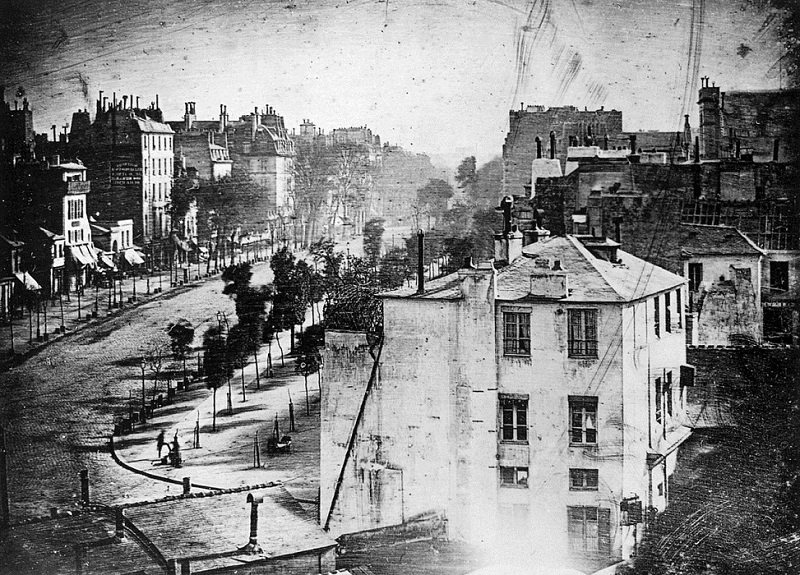
Photo By: Louis Daguerre
Year Created: 1838
Principle #1: Contrast Appropriate
The contrast of this image is low. This image has very dark areas. There isn't very much difference between the lightest and darkest areas because you can't see the importance of this image.
Principle #2: Texture
This image looks rough. The feeling this image creates is a historical image. The image looks very old and the quality isn't so good.
Principle #3: In or out of focus
The image is out of focus. Is this image focused on the buildings, the road, or the trees. the image isn't sharp.
Why did I choose the image?
I choose this image because it is very old fashion. Also, because it's the one picture I could find from the 1800 with a photographer's name. I would love to know how this image was taken.
Photo By: Nahiomy Martinez
Principle #1: KEEP IT SIMPLE
The image is a bit cluttered. There are plants on the floor and coming up on the right side of the picture. Also, it has many other object contradicting with the image, many different colors.
Principle #2: What feelings does the image create?
This image capture my attention because I've always thought that it was cool to have the a figure of an animal and you're able to put your face on it as if you were the animal. In this picture, a butterfly. In my opinion, this image has a very good value because of course, it's my little sister. The image itself won't grown on me, but she will grow and I will loopback at this picture when she keeps growing up to see how much she has changed.
Principle #3: Is the image black & white or color?
This image is color. This image was not taken at a time when only black and white was possible, because this picture is recent and we are able to take color pictures now. But in another point, I could have had the choice to make the image black and white because iPhones have that option (filter photo) or I could have edited the image and change the color.
Why did I choose the image?
I choose this image because I recently went to a butterfly small museum and what's better than my beautiful sister as a butterfly. Also, this image is bright and colorful.

Tuesday, September 24, 2019

Chapter Two

Pre-Digital Photographic Technology
Speed Graphic Cameras
The Speed Graphic Cameras were the cameras that had the highest quality of work. The first Speed Graphic camera was made in 1912 by Graflex, at Rochester, New York. In the article, The Graflex Speed Graphic FAQ, it mentions, "The Speed graphic was America's first and last great camera." People thought this camera was one of the simplest and most flexible cameras made. This camera, the "press" camera was made to capture images for special events such as weddings, documentary, advertising and any commercial photograph.
This Speed Graphic Camera affected photojournalists in a good way because back in 1900s it was allowing photojournalists to take wide range of different types of photographs. Who wouldn't enjoy looking at an image in different ways? It affected photojournalism, because it would be the way people viewed the images, it was viewed through an optical finder (which is the eyepiece that a person can look through to frame and focus on), a wire sports-finder (which is basically a simple frame were people are able to allow action outside the field of view), or on a sheet of ground glass. It was a job that had to be done the right way the first time with one shot. In the video, Weegee Tells How, Weegee says "News photography teaches you to think fast, to be sure of yourself, self confident. When you go out on a story you don't go back for another sitting, you got to get it."
This affects photojournalism because being able to own a camera as a photojournalist that takes good images, it helped financially, this is because people will purchase magazines or look more into the news. In the video, Weegee Tells How, Weegee explains, "I didn't wait till somebody gave me a job or something, I went and created a job for myself. Field as photographer and what I did, anybody else could do." He mentions that he did this without a police card and when there were stories that meant something or he knew that could get into the newspaper, what he did then was sell the picture to the newspaper.
Since the Speed Graphic Cameras, technology has grown and it will keep growing. The Speed Graphic Camera also called "press" camera, was a big hand-held camera, which had interchangeable lenses and had a choice of two shuttles, and in some the front cameras it could be tilted in different ways. But within time technology started to change. In the video, "Before There Were Pixels-Part 1" Professor Nordell states, "The cameras were getting smaller and easier to use, so photojournalist and all photographers has more flexibility and the ability to move around". With today's technology my experience with taking a digital photograph is pretty simple. As an example, "iPhones" are an easy technology to use to take pictures and it takes great images as well. With an iPhone you can take a regular picture, a portrait, or a live picture which is a moving image within a second. You can also review captured images and get feedbacks on image quality, and have an opportunity to make changes and modifications immediately. The only problem with today's technology would be the storage memory but we also have the option to delete unwanted images in order to get more space.

Photo by: Brittany Cox
Photo by: Nahiomy Martinez

Tuesday, September 17, 2019

Chapter One

Can Photographs Change the World? 

Photographs have the capacity to spread information, spread news around the world with visualization instead of always having to verbally tell stories, uniting people, showing the good and success of people, and tragic and traumatic events. Some photographs are very powerful with certain images that may impact people in different ways. It all depends on what images you may be looking through. For example; pictures of a firefighter rescuing a young girl, the firefighter automatically becomes the hero in the story. People could be encouraged within that scene and want to keep helping those who need the help. Rescuing and being there for others. Another example which could be completely different; when females look up photographs to get ideas of how they would like to look, such as hair styles or clothing. Photographs are a great help. Within good or bad. Photographs can change the world.
Photo by: Ricardo Arduengo
On September 20, 2017, a category 4 storm... "Puerto Rico is devastated and struggling to recover after Hurricane Maria pummeled the island territory" A beautiful island, a home to my family, and I have been destroyed. This was so hard for me not only because my island was destroyed but because over 50% of my family lives there and had to go through this tragic moment. My mom tried to help most of them and tried to send them help with certain things they would call us that they needed, to come to find out that the mail that was trying to been sent out from around the world had to be backed up because it could not be delivered by the mail mans over there. "As of April 4 — almost seven months since the storm hit — about 96 percent of residents on the island have had power restored”, though some were able to get power back others didn’t. For example, aunt lives up in mountains, she didn’t receive any for a very long time. I would see the photographs of many different parts of Puerto Rico and it emotionally changed everything. It was visual and then it all looked so much realistic rather than hearing about it. Wow, such a great island got themselves back up and help themselves build back up the island. Looking through the pictures with worries and thoughts, all I could do was pray and have faith everything will get better for them.
Photo by: Carlos Giusti
Photographs CAN change the world and gather an island together and make it stronger. To continue with the Hurricane story, a little over a year after the hurricane a chat was leaked. More in depth, a “Telegram Chat” was leaved in which Puerto Ricos governor and some government officials participated in. Many screenshots were leaked to the public. "The public display of anger comes after nearly 900 pages of profane and offensive private text messages were leaked in which sexist, homophobic and other derogatory language was repeatedly used.” Within these screenshots which I did read; the governor (Ricardo Rossello) made sexist and homophobic comments, mocked the death in the aftermath of the hurricane in which he also tried to cover up the deaths after the hurricane Maria, he had a lady who was also in it with him, who was withholding aid that was sent after the hurricane and made it seem like she was personally handing out like if it was her in order to make the party "look good" and as of party I meant the governors party. A lot of the help that was sent to Puerto Rico from around the world were delayed, some were spoiled, and some was abounded. What mostly hurt a lot of or I should say ALL of Puerto Rico was that while Puerto Rico reunited and were suffering and rebuilding the beautiful island the governor and his party stayed in the air-conditioned convention center in San Juan after hit hurricane and never saw a day of struggling. On top of this, while 6,000 people died, the party was just mocking that type of sadness. "Thousands of people flooded the streets of San Juan on Monday, calling for Puerto Rico Gov. Ricardo Rossello to resign from office. The mass demonstrations are expected to be one of the largest protests ever seen in a U.S. territory.” The governor at first refused to resign despite all the protests that was ongoing, until Puerto Rico got together and were so powerful; he decided to resign. The photographs of Puerto Rico were so powerful and meaningful, all you could say was "wow, Puerto Rico we have finally spoken, and we have taught the world a lesson on democracy." It felt good to congratulate ourselves and feel good that the world talked good about our value and what we deserve. We might be a small island to others, but to us Puerto Ricans we are BIG, we are everything we can and want to be.

Photographs can change some peoples perception of the world. In the video "Photos that changed the world", Jonathan Klein mentions "Since the beginning of photography, images have provoked reactions in people and those action have caused change to happen" There are images that we all see and we suddenly have our own ideas to it. Some of us see a picture and are so emotionally connected to the picture we want to do something to make the world a better place because we feel inspired by the image. In the video, "Do Photographs Change the World?" Professor says "A photojournalist can take a picture of it but it cant be published or its not allowed to be published" In which I do agree with but when there's a photo that can't be published, we can talk about it with others and try to make a difference in a different way. Speaking or maybe writing about it.


Saturday, September 14, 2019

Introduction to the History of Photojournalism

An image brings more reality into a story rather than being written. Photojournalists communicate events and news by photographs. A photojournalist often travels in order to get different their images not only do they take the pictures, but they also edit and develop their pictures, this is how they tell stories and provide visuals representations for those who need to see things through pictures to get better understandings.

The importance of photojournalism plays a big part in our world because it tells stories with pictures instead of having to read many paragraphs; sometimes it may be too much to read and readers get distracted or get bored. Also, it brings importance when a photojournalist exposes disturbing scenes of life in order to show what happened many years/centuries ago, how awareness came about and show the public how people lived. Images can change people’s mindset in this world; by having images that reveal difficult moments, accomplishments, etc. To inspire those can help change the world. For example, has anyone seen the picture on the internet of the way the ocean is slowly becoming contaminated? This is because people are exposing trash, oil, soil, etc. Into the ocean.

According to the video, “History is...” I noticed that photojournalism can be viewed as many other ways. In which the video named a few; 'History can be viewed as “No boundaries”, “larger than life”, “Humanity”, “Crucial”, and many others'. This creates many other perspectives. According to the quote from the Afrobella blog “A people without the knowledge of their past history, origin and culture is like a tree without roots.” People have to know about their past in order to understand why certain things evolved in the world, shows how and why many things worked and didn’t work in order to not make the same mistakes over and over and history won’t have to repeat itself.

Photo by: Ashley Diamond Siegert
Births are a miracle. Babies are such a gift to life. Ashley Diamond Siegert says, "Babies come when babies want to come. This may be in the middle of the work day, the middle of the night or the middle of your tropical vacation." These are the moments you want to keep forever. Having to capture moments like this can bring back so much memories the looking back at them. Being a mother cane the greatest thing and the hardest thing.


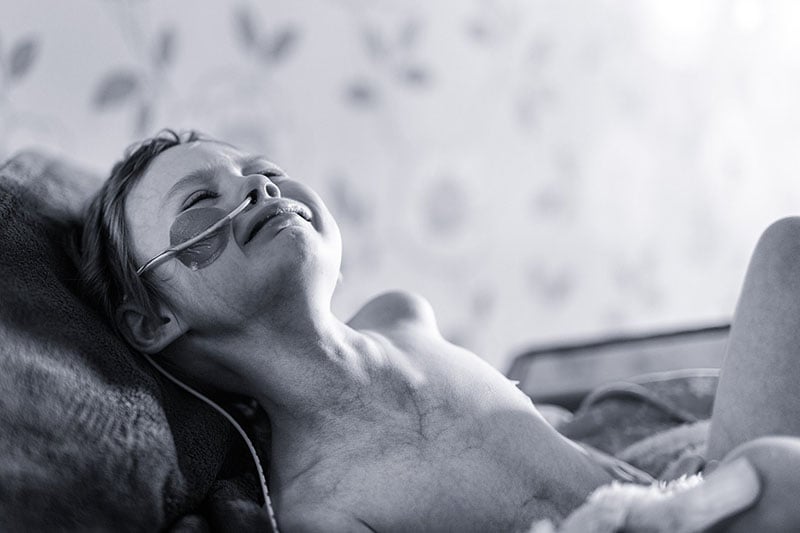
Photo by: Andy Whelan
There are many types of cancers; such as breast cancer, skin cancer, lung cancer, and many more. In this picture, Andy Whelan is the photographer of this image but is also the father this young girl. He explains how he wants people to see how his daughter fights against cancer. This is another way a photojournalist can educate people on real life situations.


Sunday, September 1, 2019

My Image of Photojournalism

When I think of the word "Photojournalism", what comes to mind is a person capturing different types of memorable events such as: accomplishments, tragedies, happy/sad moments, world wide events, news, etc.. A photojournalist communicates by using images to tell stories.

Photo by Alfred Eisenstaedt

Chapter Eleven- Concluding Chapter

Final Project 2  During the fall semester, in the online course "The History of Photojournalism" I have learned so much about t...